What polybutylene is and where it went
Polybutylene is a flexible plastic water supply pipe used in American housing from roughly 1978 to 1995. It was cheap, quick to run, and it did not corrode, which made it look like a straight improvement on copper at the time.
Florida got a lot of it. The building boom through the eighties and early nineties lined up almost exactly with the years the pipe was in production, so pre-1996 housing stock across Pasco County and the rest of the state is where it turns up. If your house was built or repiped in that window, it is worth checking.
It was run both ways. Some houses have it as the main service line from the meter to the house only. Some have it throughout, branching to every fixture. Plenty have a mix, because a previous owner replaced part of it and left the rest.
Manufacture stopped in 1995. The pipe that went in before then is still in the walls and under the slabs of houses that never had it dealt with, and it is now thirty years old at best.
How to identify it yourself
Look for grey plastic pipe, usually about half an inch or three quarters of an inch across, flexible rather than rigid. Blue and black were also made — blue is common on exterior service lines, black on some branch runs — but grey is what most Florida homeowners find.
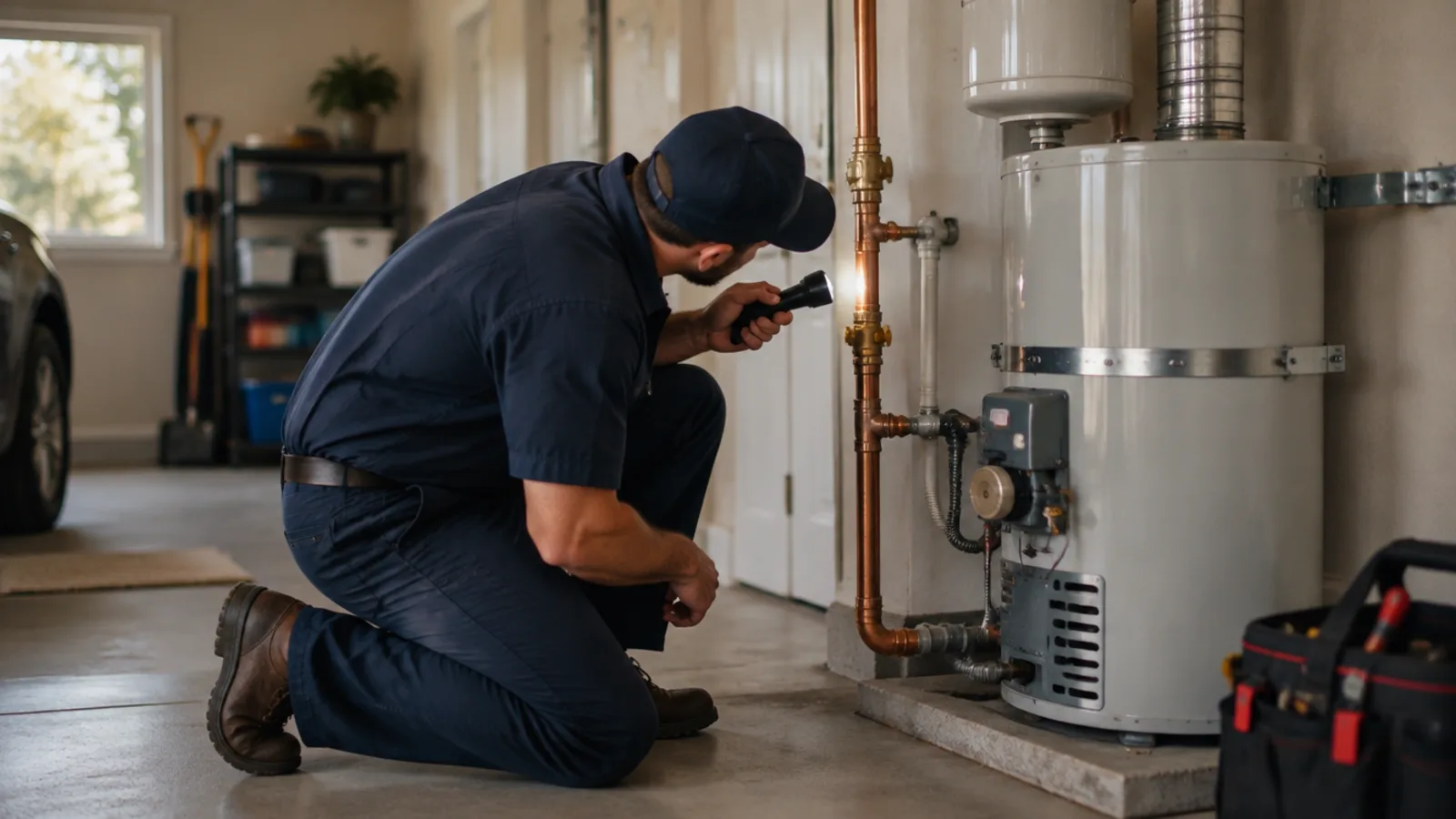
Check the three places it is normally visible without opening a wall: at the water heater connections, at the main shutoff where the supply enters the house, and under sinks at the stop valves. Also look in the garage, at a laundry hookup, and at any exposed run in an attic.
Read the printing on the pipe. Polybutylene is usually stamped PB2110. That code is the confirmation. Manufacturer names and an ASTM number often run alongside it.
Look at the fittings as much as the pipe. Original installations used grey acetal plastic insert fittings with metal crimp rings. Later work used copper or brass fittings. The fittings matter because they are where a lot of the failures start.
One caution. Grey plastic pipe at the water heater does not mean the whole house is polybutylene, and copper at the water heater does not mean it is not. A previous owner may have changed the visible ends and left everything in the walls. If what you find matters to you, it needs looking at properly rather than from the two feet you can see.
Grey, flexible, half-inch, stamped PB2110 — that stamp is the answer, and it is usually readable at the water heater without touching anything.
Why it fails
Chlorine. Municipal water is treated with chlorine or chloramine, and over years of contact it oxidizes the inside wall of polybutylene pipe. The plastic becomes brittle, develops microscopic cracking from the inside out, and eventually splits. None of that is visible on the outside until the day it lets go.
The fittings fail as well, often first. The original grey acetal insert fittings degrade the same way the pipe does, and the crimp rings put steady stress on a joint that is getting more brittle every year. A failure at a fitting is the common pattern.
The failure mode is what makes this different from copper. A corroding copper line usually weeps through a pinhole and gives you months of warning in the form of a bill. Polybutylene tends to split, and a split under pressure puts a lot of water into a house quickly.
It is also unpredictable. Some polybutylene installations have run thirty years with no failure. Others failed inside ten. Water chemistry, how much chlorine is in the supply, pressure, temperature and how the pipe was installed all feed into it. What we will not do is tell you how long the pipe in your particular house has left, because nobody can see inside it.
Under a Florida slab the problem compounds. A split in a line cast into or run beneath concrete does its damage before anyone knows, and the repair means getting through the slab.
What it means for insurance
Polybutylene is a known underwriting issue in Florida, and carriers treat it as one. What any particular carrier does with it is between you and them. Some decline to write a policy on a house that has it. Some write the policy but exclude water damage from the plumbing. Some do not ask. Some ask at renewal after years of not asking.
We cannot tell you what your carrier will decide, and we will not predict it. That is not our trade and anybody who promises you an outcome there is guessing with your money.
What we can tell you is what homeowners commonly run into, so you can ask the right question. The question to put to your agent is specific: does this policy cover water damage arising from the supply plumbing, and does the presence of polybutylene change the answer. Get it in writing.
If you are buying a house built before 1996, this belongs in the inspection conversation and in the insurance quote before closing, not after. We are a plumbing contractor — we do not perform or sign home inspections, four-point inspections or anything else that requires a licence we do not hold. What we do is look at the plumbing and tell you what is there.
After a repipe, tell your carrier and your agent. A house with polybutylene and a house that had polybutylene removed are different houses from an underwriting point of view. Keep the paperwork, the permit and the photographs. Whether it changes anything on your policy is still their call.
What a repipe involves
A whole-house repipe replaces the supply plumbing. It does not touch the drains. New lines are run, usually in PEX or copper, from the main to every fixture, and the old polybutylene is abandoned in place or removed where it is accessible.
Most of the work goes overhead where it can. Running new lines through the attic and dropping down inside walls to each fixture avoids the slab entirely, which is the main reason a repipe is often the better answer than chasing one failure at a time under concrete. Where overhead is not possible, lines go through walls or, less often, under the floor.
It means holes in drywall. There is no version of this that does not. Openings get cut at each drop and at each fixture, the work is inspected, and then the drywall is patched. Ask up front who is patching and painting, because that varies between contractors and it is a real part of the job.
It is permitted work, and it should be. A repipe is inspected by the county. Pipe Perfect LLC is a Florida Certified Plumbing Contractor, licence CFC1431903, and permits are pulled under that licence.
The house stays livable. Water is off for parts of the work and on overnight in most cases. How long the whole thing takes depends on the size of the house, how many fixtures it has, whether it is one story or two, and what the attic access is like. We will tell you after we have walked it.
We do not name a number before seeing the job. Anyone quoting a repipe over the phone has not counted your fixtures.