How each one makes hot water
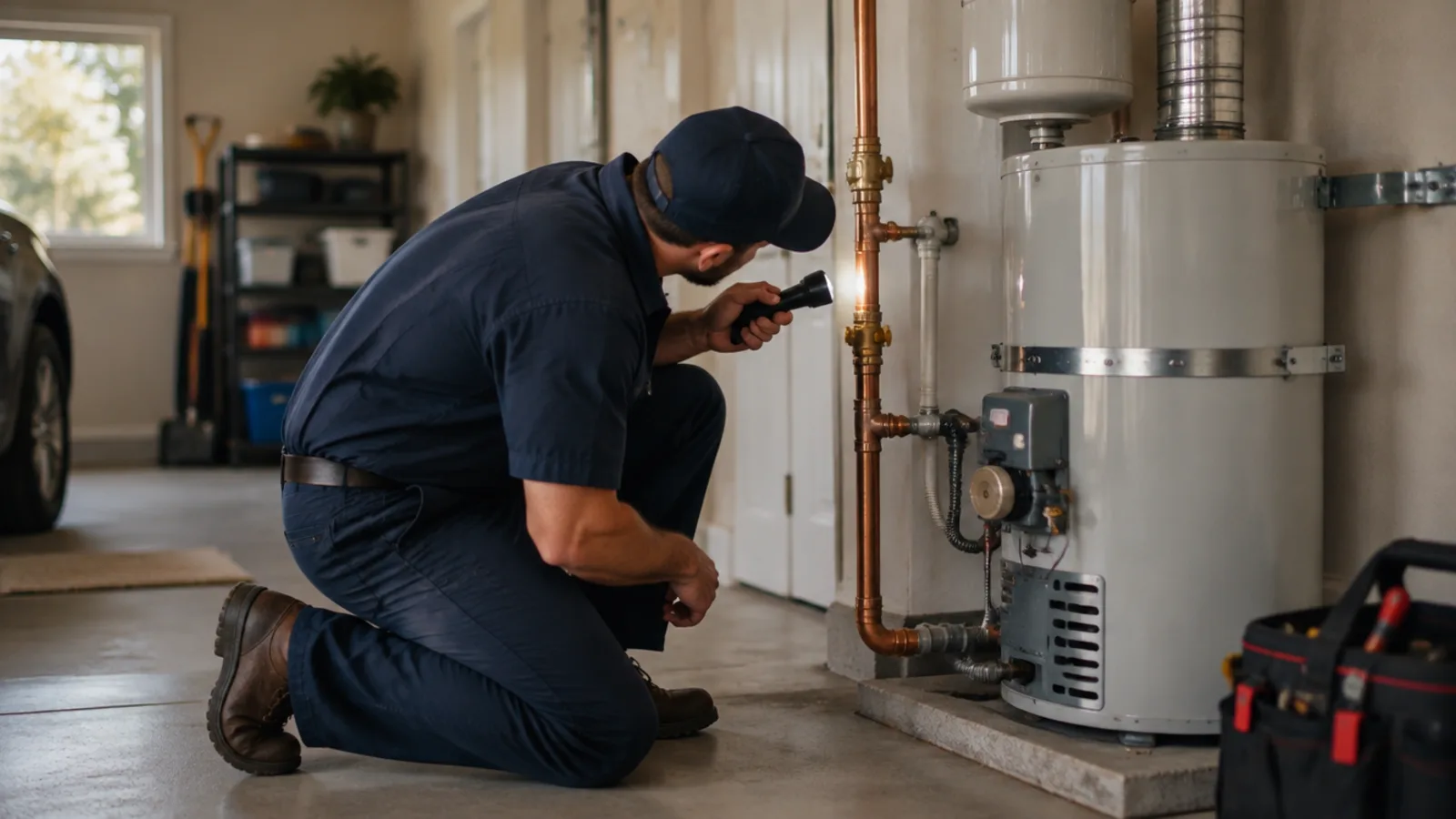
A tank heater keeps a set volume of water hot all day. When you open a tap, hot water leaves the top and cold water comes in at the bottom to be heated. It is simple, and it has been built the same basic way for a long time.
A tankless unit heats nothing until water moves. A flow sensor sees the tap open, the burner or the elements fire, and the water is heated as it passes through a heat exchanger. When the tap closes, it shuts off.
That one difference drives everything else in this guide. A tank has a reserve and a recovery time. A tankless unit has no reserve and no recovery time, but it has a limit on how much water it can heat at once.
What each one needs to go in
Swapping a tank for a tank is usually a like-for-like job. Same spot, same gas line or circuit, same vent. Going from a tank to tankless is often a different job altogether, and the house decides how big a job it is.
A gas tankless unit burns far more gas while it runs than a tank burner does. The gas line feeding the old tank is frequently too small for it, and the meter may be too. It also needs its own venting. Non-condensing units need a stainless vent. Condensing units can vent in plastic but produce acidic condensate that needs a drain and usually a neutralizer. The old flue from the tank generally cannot be reused.
An electric tankless unit draws a very large amount of current. Whole-house electric models usually need several dedicated heavy circuits, and plenty of older panels here do not have the room or the service capacity for them. Whether the panel and the service can carry it is a question for a licensed electrician. We are a plumbing contractor. We do not perform or sign off electrical work.
Space works the other way. A tank takes up a closet or a corner of the garage and needs a drain pan under it. A tankless unit hangs on a wall, and in this climate many go on an outside wall where there is no vent to run through the roof. That frees floor space, but only if the gas, power, water and vent can all reach that wall.
Flow, recovery and running out
A tank runs out. How fast depends on its size and how many people shower back to back. Once it is drained, you wait while it reheats. A tank that is the right size for the household rarely runs out. One that is too small runs out every morning.
A tankless unit does not run out, but it can be outrun. It is sized by flow, and if two showers, a dishwasher and a washing machine all call for hot water at once, the unit heats as much as it can and the temperature at every tap drops. Sizing it for how the household actually uses water matters more than anything on the box.
Florida helps tankless here. The water coming into the house is warm for most of the year, so the unit has less work to do to bring it up to temperature, and it delivers more hot water than the same unit would in a cold state. Winter mornings are when it gets tested.
Two habits catch people out. A tankless unit needs a minimum flow before it fires, so a tap barely cracked open may stay cold. And the hot water already sitting in the pipes can be followed by a short slug of cold before the heated water arrives. Neither is a fault. Both are worth knowing about before you choose.
A tank runs out. A tankless unit does not run out, but it can be outrun.
What Florida's hard water does to each one
Most of this county runs on hard water. Every time it is heated, calcium and magnesium drop out as scale. Both types of heater collect it. They collect it in different places and need different maintenance because of it.
In a tank, scale settles on the bottom as sediment. It insulates the water from the burner, makes the tank rumble and pop, and makes the steel run hotter than it was designed to. Flushing the tank once a year keeps it in check. The anode rod, which corrodes so the tank does not, should be checked every few years and replaced when it is spent.
In a tankless unit, scale coats the inside of the heat exchanger. Output drops, the unit starts throwing error codes, and eventually the exchanger fails. The fix is descaling: isolating the unit with its service valves and circulating a descaling solution through it on the schedule the manufacturer sets. A unit installed without those service valves is much harder to maintain, so it is worth checking that they are there.
A water softener or a scale-reduction system slows all of this down for either type. It does not replace the flushing or the descaling.
How long each one lasts, and how to choose
A standard tank heater typically lasts eight to twelve years. A tankless unit commonly lasts fifteen to twenty. Those are general service-life ranges for the appliance, not a forecast for any one installation. Hard water pulls both toward the low end, and a tankless unit that is never descaled does not get near the top of its range.
When a tank fails, it often fails by leaking, and the water in it ends up on the floor. When a tankless unit fails, it usually just stops making hot water. Both make for a bad morning. Only one of them floods a garage.
Tankless tends to suit a house with a gas line already big enough or easy to upsize, a household that keeps running out of hot water, tight floor space, and someone willing to keep up the descaling. A tank tends to suit a house where the gas line, venting or electrical service would need major work, a household with modest hot water use, or a replacement that needs to happen quickly.
We will tell you what your house needs for either option once we have seen the gas line, the vent route, the space and the water. We will not name a number before that, because those are the things that decide it.