Stop the water first
Start at the fixture. Every toilet has a small valve on the wall or floor behind it, and every sink has two under the basin, one hot and one cold. Turn them clockwise until they stop. If the leak is a split supply line or a running toilet, that is the whole job and the rest of the house keeps its water.
If the fixture valve will not turn or will not stop the water, go to the main. Do the same if the leak has no fixture valve, like a wall, a ceiling, the slab or the water heater. On most Florida houses the main is on an exterior wall on the street side, in the garage, or near the water heater. A lever turns a quarter turn so it sits across the pipe. A round handle turns clockwise and takes several full turns. If neither one holds, the meter box at the street has a valve on the street side of the meter that takes a meter key or a crescent wrench.
Once the main is closed, open the lowest faucet in the house. That can be a hose bib outside, a laundry tub or a ground floor tub spout. The pipes are still full and still under pressure after the valve closes. Draining that water through a faucet sends it down a drain instead of out through the break.
Leave the main closed until we get there. Turning it back on to see where the water is coming from puts the same water back on the same floor.
Make the room safe before you walk into it
Water and electricity in the same room is the part of this that hurts people. Before you step into standing water, shut off the breaker for that area at the panel. Only do that if you can reach the panel standing on dry ground with dry hands. If the panel is in the wet area, if water is coming through a light fixture, or if you would have to walk through water to reach the panel, stay out of the room and call the power company. That is their job and not one to improvise.
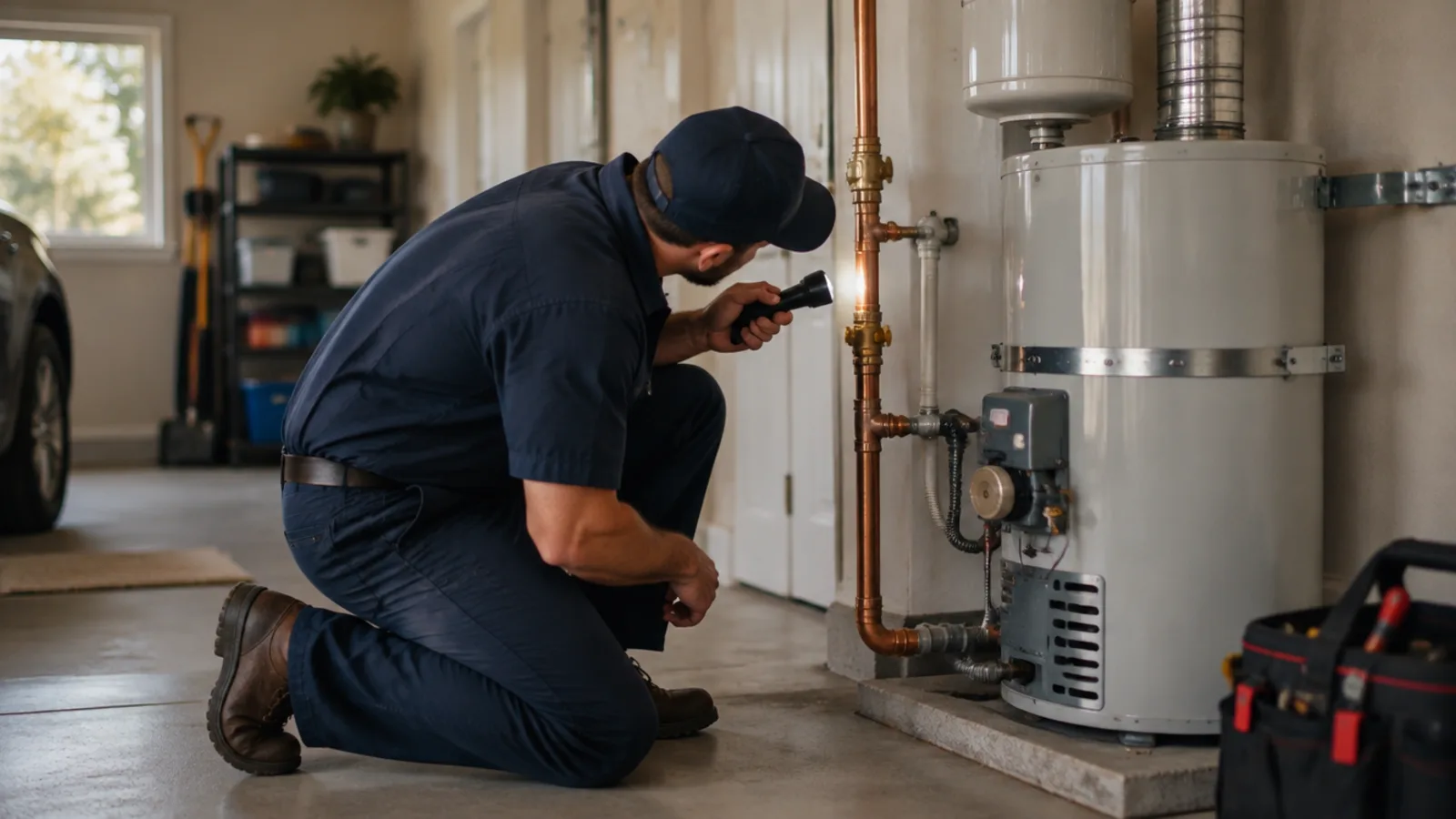
Deal with the water heater next. On an electric heater, switch off its breaker. It is usually a double breaker marked for the heater. An element that keeps heating while the tank drains can burn out. On a gas heater, turn the control knob on the front of the gas valve to off, or close the gas shutoff on the line feeding it. If you smell gas anywhere near it, do not touch any of that. Leave the house and call the gas utility from outside.
If the water heater itself is leaking, close the cold supply valve on top of it. That stops new water being pushed into a tank that is already losing it.
Keep children and pets out of the room and shut the door if there is one. Wet tile is slick and wet ceilings come down. If the water came up out of a drain, it is sewage, not water. Nobody touches it barehanded and nobody walks through it barefoot.
Save what is still dry, and photograph all of it
Move what the water has not reached yet. That means rugs, boxes, electronics, anything on the bottom shelf, and anything made of cardboard or particleboard. Set furniture legs on foil, plastic lids or blocks so the wood does not soak up water. Towels along the edge of the wet area keep it from spreading into the next room.
Before you mop, take photographs. Get wide shots of each room showing where the water is, close shots of the source if you can see it, the ceiling if it came from above, and anything damaged. Take a short video walking through it. Your phone dates them for you.
Photographs taken before anybody cleaned up are the most useful thing you can have if this turns into a claim. Whether any of it is covered is between you and your carrier. We do not know what your policy says and we will not guess what an adjuster decides. Many policies ask you to take reasonable steps to keep the damage from getting worse. That is what everything on this page is.
After the photographs, get the water off the floor. Use a wet vacuum, a squeegee, or a push broom toward a door or the garage. Do not use a household vacuum on standing water.
What not to do while you wait
Do not pour drain chemicals into a backed-up line. If the main line is blocked, the chemical goes nowhere. It sits in the standing water in your tub or on your floor, and it is still there when somebody has to open the line. If you already poured something in, tell us when you call. It changes how the line gets opened.
Do not run the dishwasher, the washing machine or a shower to test it. Do not flush the toilet again to see if it clears. If a drain is backing up, every gallon you send down comes back up somewhere, usually at the lowest fixture in the house. Tell everybody at home, because this is the step people break without thinking about it.
Do not turn the main back on to see if the leak stopped. Do not wrap a split pipe in tape and call it fixed. Do not relight a gas water heater that went out while it was leaking. Do not open the sewer cleanout outside with a blocked line behind it. And keep everybody out from under a ceiling that is sagging with water.
Do not start tearing out flooring or cutting drywall before it is photographed. Drying out the structure properly is a water mitigation job, not a plumbing one, and it starts after the source is fixed.
Running the dishwasher to see if it is fixed is how a kitchen floods twice in one night.
What to have ready when the plumber calls back
Say what failed and where. A split line under the kitchen sink, water coming through the ceiling under the upstairs bathroom, a toilet and a shower both backing up, water around the base of the heater. Say it plainly. That one sentence decides what parts go on the truck.
Say which valve you closed and whether it held: the fixture stop, the main at the house, or the meter. If the meter dial is still moving with every fixture off, say so, because that means water is still going somewhere.
For a water heater, tell us gas or electric, tank or tankless, and where it sits. Give us the size and age from the data plate on the side if you can read it safely. A photograph of that plate is better than reading it out. For a leaking pipe, tell us what it looks like where you can see it: copper, white or cream plastic, gray plastic, or red and blue flexible tubing. For a backup, tell us how many fixtures are affected, whether you poured anything down, and whether it has happened before and roughly when.
Then the practical things. A gate code, where to park, whether there are dogs, and where the meter box and the sewer cleanout are if you know. Send the photographs if we ask for them. Pipe Perfect LLC is a Florida Certified Plumbing Contractor, license CFC1431903. We stop the leak and repair the plumbing. We do not perform or sign home inspections, four-point inspections, or anything else that needs a license we do not hold.